

How weather affects local fire behavior


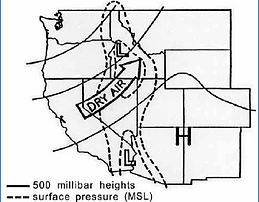
Air Temperature-
This is one of the key factors in determining how wildland fires start and spread. Temperature affects the flammability of forest fuels through heat transfer and can raise the probability of the ignition point.
Relative Humidity
(RH)-
This is the ratio of moisture in the air compared to the maximum amount of moisture that air would contain if it were saturated. For example low rh like 15, fuels are dry compared to rh of 80, most likely after a rainstorm.
Wind-
Wind is the most variable and least predictable of all of these. Winds are strongly affected by the shape of the topography. It can take away moisture in the air, often drying out forest fuels. When partnered up with an active fire it can carry/ aid fire brands igniting a fire. Surface winds at most locations are stronger in the afternoon than in the evenings.
Atmospheric Stability
Stable air reduces fire spread, while unstable air creates upward movement, contributing to potential plume dominated fires and heavier winds. For example, with no cloud coverage in the sky, this is considered an unstable atmosphere because the atmosphere encourages strong vertical movement. This allows fire columns to rise high. On the other hand, a stable atmosphere resists vertical movement, keeping smoke and heat closer to ground level.

Precipitation
This is pretty self explanatory, though it is a primary factor determining wildfire fuel moisture, with rain or snow inhibiting ignition and reducing the rate of spread. This all depends on the duration and intensity. Light rain is great though it evaporates quickly. If we want real results a sustained soaking rain is required to significantly increase fuel moisture and truly suppress fire.
Topography
Fire moves faster uphill, roughly doubling its speed for every ten degree increase in slope. Whereas fire moves downhill (backing), it burns very slow and is more controllable. South facing aspects also intensify fires by creating hotter, drier conditions and accelerating air flow (chimney effect)